Why Choose a Dentist for Facial Aesthetic Treatments?
Last updated 29 October 2026
In short: A well-trained dentist can be one of the safest people to give you anti-wrinkle injections or dermal fillers. Dentists study the muscles, nerves and blood vessels of the face in depth, give injections every working day, and can legally prescribe Botox after seeing you in person. Extra aesthetics training still matters, so always ask what your practitioner holds.
Written by the Harleston Dental & Aesthetic Clinic team · Clinically reviewed by Dr Matin Ahmadi, Dentist, DDS, MFDS RCS(Ed), MSc Aesthetic Medicine (GDC 227549) · Last updated: 29 October 2026
Maybe it's the frown line that makes you look cross in photos, or a top lip that has thinned over the years. Then a friend mentions she had hers done at the dentist on Redenhall Road, and your first thought is: the dentist? Really?
Why do dentists offer facial aesthetics at all?
Dentists work on the lower third of the face every day, so the step into facial aesthetics is shorter than people expect. When planning crowns, veneers or aligners, we already assess lip position, smile line and jaw muscles. Injectables let us treat the soft tissues that frame the teeth too.
Your dentist often already holds your medical history and has seen your face at rest and in motion over many visits. That doesn't mean every dentist should offer facial aesthetic treatments, but one who has trained properly starts with a strong foundation.
What does a dentist bring that a non-medical injector may not?
Four things matter most: detailed knowledge of facial anatomy, daily practice with injections, the legal right to prescribe botulinum toxin after a face-to-face assessment, and training in recognising medical problems. A beauty therapist may be skilled, but cannot prescribe and answers to no healthcare regulator.
- Anatomy. A 2019 review of vascular complications in the Journal of Clinical and Aesthetic Dermatology concluded that facial filler injectors need thorough anatomical knowledge. Dental training covers the head and neck in detail.
- Injection skill and comfort. Dentists give injections daily and are used to people who dislike needles. Our approach to nervous patients carries over to aesthetic appointments.
- A clinical setting. Dental practices are regulated by the Care Quality Commission, with infection control and emergency procedures in place.
- The whole smile. Lip filler that looks lovely at rest can look odd once you smile. A dentist plans with your teeth in mind.
Who is legally allowed to give Botox and fillers in the UK?
The rules differ for each. Botox is a prescription-only medicine, so a doctor, dentist, pharmacist prescriber or nurse prescriber must assess you in person before it can be prescribed. Dermal fillers are classed as medical devices rather than medicines, and in England there is still no law limiting who can inject them, apart from the ban on treating under-18s.
That gap is closing. In August 2025 the government confirmed a "red, amber, green" licensing scheme for England. Botox and fillers sit in amber: non-healthcare practitioners would need a licence and oversight from a named regulated healthcare professional, while qualified healthcare professionals could treat independently. At the time of writing, the scheme is not yet in force.
| Practitioner | Can prescribe Botox? | Regulated by |
|---|---|---|
| Dentist | Yes, after a face-to-face assessment | General Dental Council (GDC) |
| Doctor | Yes | General Medical Council |
| Nurse prescriber | Yes, if an independent prescriber | Nursing and Midwifery Council |
| Pharmacist prescriber | Yes | General Pharmaceutical Council |
| Non-healthcare injector | No | No healthcare regulator |
Is every dentist automatically qualified to do facial aesthetics?
No. Dental school doesn't teach Botox or fillers, so a dentist needs separate postgraduate training. In 2025 the GDC removed non-surgical cosmetic injectables from its Scope of Practice guidance, and the Joint Council for Cosmetic Practitioners (JCCP) confirmed these treatments are not classed as dentistry. Dentists must still meet the GDC's wider professional standards.
A GDC number tells you someone is a registered dental professional, not that they've trained in aesthetics. So ask what qualification they hold, how often they do the treatment, and whether they're on a register such as the JCCP or Save Face.
At our clinic, aesthetic treatments are supervised by Dr Matin Ahmadi, who holds an MSc in Aesthetic Medicine, has more than 12 years of experience, trains other clinicians in aesthetic medicine and is a member of the British College of Aesthetic Medicine. Dr Cedric Poole holds a Level 7 Diploma in Facial Injectable Treatments and is listed on the Save Face register. Read their profiles on our team page.
Which facial treatments link most closely with dental care?
The overlap is strongest around the mouth and jaw. Gummy smile treatment, jaw muscle relaxation, lip enhancement and lines around the mouth all change how your smile looks. A dentist judges these alongside your bite, gum line and tooth shape.
- Gummy smile treatment: a little muscle relaxant softens the muscle that lifts the upper lip too high.
- Non-surgical jaw reduction: relaxing a bulky masseter muscle can slim the jawline and may ease clenching.
- Lip enhancement: volume planned around your smile, not just your lips at rest.
On grinding, a 2025 overview in the journal Toxins found hints of less pain and lower bite force after botulinum toxin, but the evidence was too weak for firm conclusions. So we'd assess jaw joint problems first and often start with a custom night guard.
What should happen at a safe consultation?
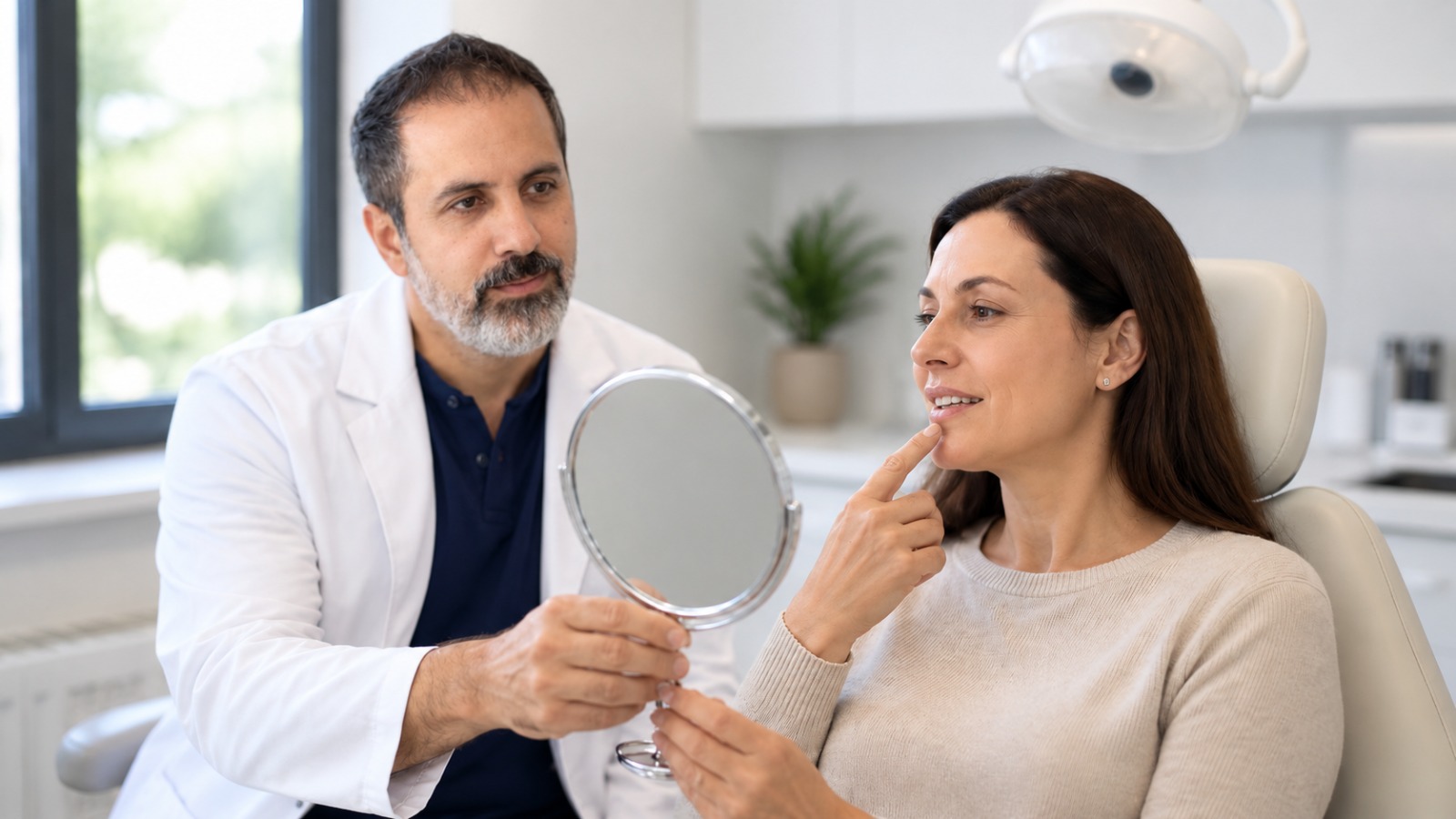
A proper consultation happens in person, covers your full medical history and leaves you time to think. The prescriber should examine your face, explain what each treatment can and can't do, discuss the risks plainly and record your consent. Pressure to book on the spot is a warning sign.
Save Face, a government-approved register, found that in over two thirds of Botox complaints it received, patients hadn't been told it was a prescription medicine or seen a prescriber in person. Nearly four in ten had no consultation at all.
Before treatment, you should be able to say yes to each of these:
- I met the prescriber in person, not by video or phone.
- I know which product will be used and that it's licensed in the UK.
- I've been asked about pregnancy, medicines, allergies and past treatments.
- I have written aftercare advice and know who to call if something feels wrong.
What are the risks, and what happens if something goes wrong?
Most side effects are minor: bruising, swelling, redness or tenderness that settle within days. Serious problems are rare. The one clinicians watch for most is vascular occlusion, where filler blocks a blood vessel. It must be recognised and treated quickly, which is why your injector's training matters so much.
| Complication | How common | Source |
|---|---|---|
| Bruising, swelling, redness | Common, usually settles in days | NHS |
| Vascular occlusion from filler | Rare, roughly 0.01% to 0.05% of injections | 2025 systematic review and meta-analysis |
| Blindness after a vascular event | Main outcome in 61% of published cases reviewed | Sito et al., 2019 |
Hyaluronic acid fillers can usually be dissolved with an enzyme called hyaluronidase. If you notice severe or worsening pain, pale or mottled skin, or any change in your vision after filler, contact the clinic straight away. For sudden vision problems, call 999 or go to A&E.
A healthcare professional won't remove every risk, but it shifts the odds. A Save Face audit for 2017 to 2018 found that 83% of the procedures behind complaints had been carried out by beauticians, hairdressers or laypeople.
How much do facial aesthetics cost at a dental clinic?
At Harleston Dental & Aesthetic Clinic, anti-wrinkle injections start at £225 for one area, and most filler treatments start from £300. The NHS puts typical UK Botox prices at around £100 to £350 per treatment. Cosmetic Botox and fillers aren't available on the NHS, so all aesthetic treatment is private.
| Treatment | Our price |
|---|---|
| Anti-Wrinkle Injection (Botox) - 1 Area | £225 |
| Anti-Wrinkle Injection (Botox) - 3 Areas | £325 |
| Lip Enhancement | From £300 |
| Gummy Smile | From £199 |
| Jawline Slimming | From £300 |
| Profhilo | From £350 |
See every price on our facial aesthetics fees page. A 50% deposit is taken at booking, refundable if you cancel within 14 days. Finance options through Tabeo can spread the cost.
A dentist or somewhere else?
| Your situation | A sensible first step |
|---|---|
| You want lip or gummy smile treatment alongside whitening, veneers or aligners | A dentist with aesthetics training, planning your smile as a whole |
| You clench or grind and wake with jaw ache | A dental assessment first; muscle relaxant may be an add-on |
| You have acne, rosacea or a changing mole | Your GP or a dermatologist |
| You're offered filler for the body, such as a "liquid BBL" | Walk away; the government is prioritising restricting these high-risk procedures |
| Price is your only reason for choosing a clinic | Check who prescribes, which product, and the aftercare |
Frequently Asked Questions
Can my dentist legally give me Botox?Yes. Dentists can prescribe botulinum toxin after assessing you face to face. Also check they've trained specifically in aesthetic injections.
Is aesthetic treatment from a dentist more expensive?Not necessarily. Our anti-wrinkle injections start at £225 for one area, within the £100 to £350 range the NHS quotes for UK clinics.
How long do the results last?The NHS says Botox usually lasts around 3 to 4 months, while dermal fillers usually last between 6 and 18 months, depending on the product and area.
Can I have Botox or filler if I'm under 18?No. Since October 2021 it has been illegal in England to give Botox or filler injections to under-18s for cosmetic reasons.
What if I don't like my result?Talk to your practitioner. Anti-wrinkle injections wear off within months, and hyaluronic acid fillers can usually be dissolved.
Book a consultation in Harleston
For an honest conversation about whether facial aesthetics suit you, visit us at 24-26 Redenhall Road, Harleston, Norfolk, IP20 9ER. Call 01379 854466 or contact us online. We're open until 7pm on Wednesdays and on Saturday mornings. New to all this? Our beginner's guide to facial aesthetics is a good place to start.
Book a Consultation
Fill in the form below and our team will be in touch to arrange your appointment at Harleston Dental & Aesthetic Clinic.